
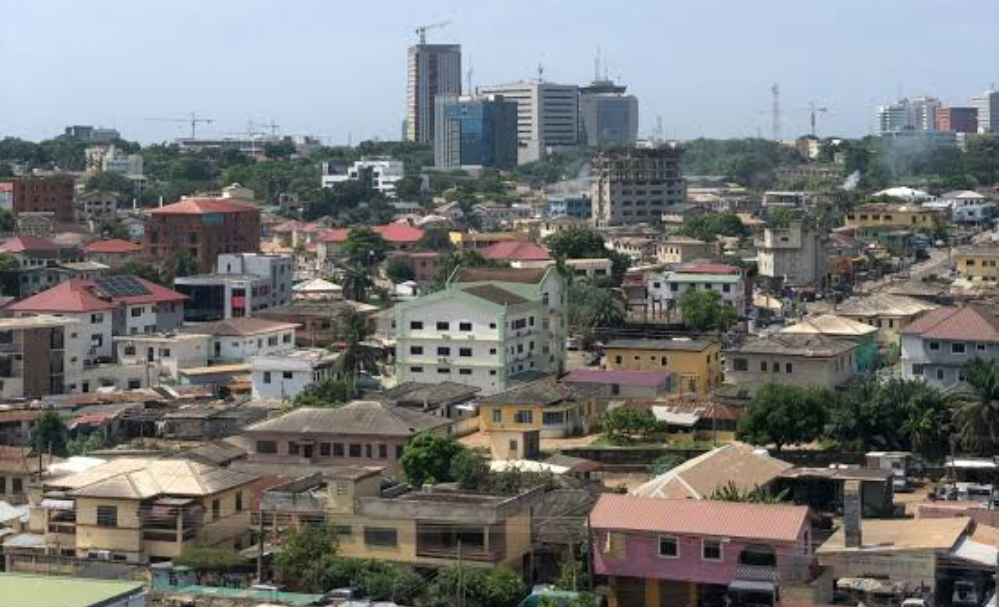
Accra recorded the fourth-highest estimated nitrogen dioxide exposure among the West African capitals assessed in a KNUST-led study, which identified the city as a persistent exposure hotspot during both wet and dry seasons.
The Ghanaian capital scored 50.4 on the study’s relative exposure index, behind Abuja at 100, Bamako at 68.2 and Ouagadougou at 52.7. The researchers analysed satellite observations from 2019 to 2024 alongside population data to assess where elevated pollution coincided with populated areas.
The index provides a comparison of estimated exposure across cities. The researchers stressed that the rankings do not establish breaches of air-quality standards or directly measure health risks. They are based on satellite measurements of nitrogen dioxide in the atmosphere, rather than direct readings of the air people breathe at ground level.
The research identified persistent exposure hotspots along the Gulf of Guinea corridor, including Accra, Lagos, Cotonou, Lomé and Abidjan. Several urban centres remained hotspots during the wet season despite falling nitrogen dioxide levels.
Nigeria recorded the highest annual population-weighted exposure among the countries studied. Ghana, Benin and Côte d’Ivoire also showed elevated exposure, alongside Mali and Senegal.
Nitrogen dioxide is associated with emissions from vehicles, industry, power generation and the burning of fuels and vegetation. The study found that pollution generally intensified during the dry season, when increased burning and weather conditions favour its accumulation.
To make the findings accessible, the researchers developed the City-Level Nitrogen Dioxide Exposure platform, known as CLeNE. It combines observations from the Sentinel-5P satellite with population information and city boundaries to produce interactive maps, exposure rankings and seasonal comparisons.
The platform is intended to help policymakers, environmental agencies and researchers identify areas requiring attention and support urban planning in a region where ground-based air-quality monitoring remains limited.
The research team comprised Prince Junior Asilevi, Alex Kwao Ablerdu and Emmanuel Quansah of the Department of Meteorology and Climate Science at the Kwame Nkrumah University of Science and Technology, Kumasi, and Stephen Amankwah of the Ghana Meteorological Agency.
Asilevi conceptualised the research and led the analysis, while Ablerdu developed the web application. Amankwah contributed to its visual design, and Quansah supervised the work.
The researchers acknowledged uncertainties arising from satellite measurements, population estimates and the spatial resolution of the data. Future development will incorporate finer-resolution observations and surface nitrogen dioxide data.
The study, Development of a city level nitrogen dioxide exposure (CLeNE) intelligence platform for West Africa, was published in Discover Environment on October 10, 2026.


